A Grandfather's Gift
  • Home
  • The Gift
  • About
  • Contact
  • Resources
  • Gallery
  • Home
  • The Gift
  • About
  • Contact
  • Resources
  • Gallery

A Grandfather's Gift:
​From the Underground Railroad to Thoughts on Race


Map: Compiled from "The Underground Railroad from Slavery to Freedom" by Willbur H. Siebert Wilbur H. Siebert, The Macmillan Company, 1898.[1], Public Domain.
If you are new to this site, please click here to read the story behind A Grandfather's Gift.
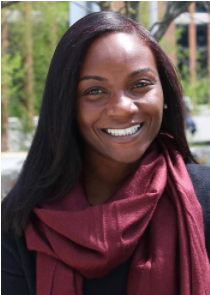
Kamala Harris for the All the People

7/29/2024

0 Comments

 
Picture
Vice President Kamala Harris
Guest Post by Kristine Schwartzman

On July 24, 2024, as President Joe Biden officially announced that he would not accept the Democratic presidential nomination for the upcoming election, and endorsed Vice President Kamala Harris as the nominee, we witnessed something monumental. For the first time in history, a woman of color will most likely be the presidential nominee of a major political party. 

Vice President Harris is not the first Black woman to seek the nomination of a major party. Shirley Chisolm, whose motto was "Unbought and Unbossed," ran for the Democratic presidential nomination in 1968. A courageous trailblazer, "Fighting Shirley" faced discrimination from not only the opposition, but also from the mostly male members of the Congressional Black Caucus. 

These moments don't happen often. As an important election looms before us, one where our choice is moving back to a time when people of color and women had few choices, or forward to a place where every little person of color, every little girl, every child born today realizes they can become president, we not only need to remember how far we've come, but also to remember those before us who worked so hard for change. We have power in our own hands with our votes. It is up to us now.

Not registered to vote? Click here to register, How to Register to Vote

0 Comments

What We Carry

3/18/2024

0 Comments

 
National Youth Poet Laureate Amanda Gorman and world-renowned cellist Jan Vogler collaborate on a unique performance of Gorman’s poem, “What We Carry,” set to Vogler’s performance of "Suite for Violoncello No. 1 in G Major, BWV 1007: I. Prélude." Amanda Gorman’s latest book, “Call Us What We Carry,” is available now. Jan Vogler’s album, “Bach: The Cello Suites” is available for streaming here:  https://sonyclassical.lnk.to/VoglerBachCelloSuites.

View the performance from Stephen Colbert's Late Show, here:

0 Comments

A Picture Book of Martin Luther King - Reflections On

2/26/2024

0 Comments

 
Reflections on the Children's Book
Experiencing A Picture Book of Martin Luther King, Jr. With Children
Guest post by D.A. Smith

Reviewing a children’s book can sometimes present challenges beyond the scope of reflecting on the images and sometimes rhyming words used to entertain and teach our youngest members of society. There are well known childhood favorites, whimsical fantasies, fairy tales, sweet bedtime stories and endearing characters to choose from, and then there are books that conjure more silence than laughter.
​
For me and my children, few words were needed to express the thoughts and emotions that came from reading David A. Adler’s A Picture Book of Martin Luther King, Jr., illustrated by Robert Casilla. 
Picture

​It’s not that the book isn’t beautiful, it is. The writing was not too complicated, it was clear, and the story was easy to understand even for… a child. And maybe that in itself is the reason so few words came. We got it. A boy, a faithful boy, grew into a man who changed the course of history through bold acts of strength and love, and he died at the hands of someone who was guided by fear, anger and dare I say, hate. 

When my youngest looked up at me after the story and said, “Wait. So, the boys' parents didn’t want them to play with Martin because of his skin color?” I could only answer, “Yes. That’s what I understand.” to which my eldest said “I am so glad we don’t live like that anymore.” To her I said “Well, it’s because of men like Martin Luther King, Jr. that we don’t” She then got up and went to her room, presumably to think while she worked on a friendship bracelet. 

What I kept to myself the morning we read Adler’s book is a truth as simple and as old as recorded history can confirm. Human hearts are messy. Thinking of other people as different as we are, whether because of skin color, religious affiliations, political allegiances, languages or even economic standing is a fool's game. What we hold in common is far more profound, and that is something Martin Luther King Jr. understood. Love is the answer. 
0 Comments

Freedom Day for All Americans

7/10/2023

0 Comments

 
Picture
If One of Us is Enslaved, We All Are

​Did you know that June 19 was a federal holiday, known as Juneteenth, Freedom Day or Emancipation Day?  I had never heard of it until President Joe Biden recognized it as a federal holiday in 2021. Was this a part of the history lessons you were taught in school? Unfortunately, this did not make it into our history books in Wyoming.

The Juneteenth National Independence Day Act was finally recognized and signed into law, after many years of advocacy and steadfast leadership by a trio of incredibly determined ladies.

​Lula Briggs Galloway, Opal Lee, Clara Peoples and many other activists were first acknowledged for these efforts in 1996.  We’ll talk more in a future post about them and their dedication to shining a light on this shameful part of our American history.   
Picture
Makenna, 4, dances with the Juneteenth flag during Longmont’s annual Juneteenth Celebration at Roosevelt Park in Longmont on Saturday. (Cliff Grassmick — Staff Photographer)

What is Juneteenth, and why create a federal holiday to recognize it?
​ 

On September 22, 1862, President Abraham Lincoln announced that the Emancipation Proclamation would go into effect on January 1, 1863, promising freedom to enslaved people in all the rebellious parts of Southern states of the Confederacy. Texas was included, but not the federally held territories of Delaware, Maryland, and West Virginia.  

Although the Emancipation Proclamation declared an end to slavery in the Confederate States, it did not end slavery in the states that remained in the Union. For a short while after the fall of the Confederacy, slavery remained legal in two of the 
Union border states – Delaware and Kentucky. Those slaves were freed with the ratification of the Thirteenth Amendment to the Constitution, which abolished chattel slavery nationwide on December 6, 1865. 


In simple terms, while slavery was abolished in 1862, slave owners in a handful of states chose not to comply until more than 2 years later. Juneteenth is the celebration of freedom for those enslaved people. 

Juneteenth is now a federally recognized holiday, observed every year on June 19. How will it be celebrated? People celebrate everywhere, from backyard barbecues and Block parties to big concerts, festivals, and parades. There are marathons, Miss Juneteenth contests, educational programs, commemorative art exhibitions, programs showcasing black culture, readings of the emancipation proclamation, and more. Traditional African foods may be served, frequently with red food and drinks, to symbolize resilience and joy.

My take on this is to
celebrate Juneteenth by acknowledging our history, embracing diversity, and actively working towards inclusion and equality for all. In discussions with neighborhood friends this year, we talked about whether it was culturally appropriate to observe this holiday and if it was possible to do so respectfully. My small rural town is predominantly white. In my efforts to educate myself and share my knowledge with my friends, I learned that many others, including African Americans also have mixed emotions about this history.


One comment I read from a person of color was, “I don’t know if I am for celebrating Juneteenth. They told a lie, they hid the lie, and then they told us two years later, and now you tell us to celebrate. Really?”

Another said, “I am going to a cookout and festival that will feature black-owned vendors and small businesses, and I will buy from them.”

Can I respectfully celebrate by honoring cultural traditions that are not mine and doing my best to lift people of color who are living among us? 

For me, my 2023 Juneteenth was a quiet and personal celebration, filled with sadness for the past and hope for the future. I chose to read, learn and educate myself and share with my friends these hidden and whitewashed parts of our history.

Next year, I hope we all have more to celebrate in our quest for equality and human dignity.     

Reference Links:


2023 Juneteenth Day of Observance
How to Celebrate Juneteenth
President Biden signs the Juneteenth National Independence Day Act
0 Comments

A Man Was Lynched Yesterday

1/30/2023

0 Comments

 
Picture
Nancy Kendall's life of working with the Underground Railroad is a constant reminder that there are good Samaritans out there who risked their lives as Nancy Kendall and Andrew Kendall did to help others.

They are often lost in the background. I think they are not mentioned, because their lives don't seem dramatic enough. And, because many of them were, and are, Black themselves. 

We all know Harriet Tubman, of course. But, how many of us have heard of Walter White?

Walter White was a Black civil rights leader who helped form the NAACP. He was a white news reporter who let the rest of America, and the world, in on Jim Crow laws, lynchings, "unsolved" murders, and the crimes committed against Black citizens by white America. 

"White Lies: The Double Life of Walter F. White and America's Darkest Secret" by A.J. Baime uncovers the details of a remarkable life - Walter F. White, a Black activist who risked his own life investigating racist murders while passing for white. He was fair skinned with a racially mixed background who passed easily, leading a dangerous double-life, using white privilege to shine a light on the America's darkest crimes. 

In the wake of yet another Black man's death at the hands of those who were supposed to protect and serve, we take courage in the fact that there are those in the past and present who work to change the course of justice in America. Their stories must be told.
​
0 Comments

Did Nancy Kendall Think About the Climate?

8/17/2022

0 Comments

 
Picture
"In their minds, cutting down thousands of acres at a time would improve the weather."
Guest post by Shelly Michell
What does the historic passing of the Inflation Reduction Act have to do with our beloved Nancy Kendall, you might ask?  I keep thinking of the climate changes we now experience and how our thinking quickly evolved in such a short period of time.  

Did early settlers in this country think about the long-term negative effects of their land clearing, their coal burning, and farming techniques?  Probably not.  Many people still feel that humans have not contributed much to these changes in the atmosphere and weather patterns and such.  We had not yet gained the knowledge then about the effects of the industrialism that was just beginning in her time. 

Now we are faced with both the scientific evidence and the opportunity to mindfully make changes to improve the health of our planet. Nearly 370 billion dollars in this Act will help us make those changes.  

Communities of color are disproportionately affected by climate change. More than half of African Americans in the United States live in the South, an area that is and will continue to see stronger hurricanes and increased flooding due to climate change. 
​
Historic segregation means many Black Americans live in less desirable, low-lying and flood prone areas throughout the United States.  Many of these communities are adjacent to power plants, petrochemical plants factories and other sources of pollution. A large number of African Americans and other people of color face living in unhealthy conditions that severely impact their lives.

I applaud this legislation for many reasons, not the least of which is that it addresses racial inequity and fights to change it.  Nancy Kendall would be proud. 

In the "What Were They Thinking?" Category:

For an interesting perspective on climate beliefs of early settlers, scientific thinkers, and propagandists of the era, read "The first American settlers cut down millions of trees to deliberately engineer climate change," by Stephanie Buck.      
0 Comments

Celebrate Juneteenth - Why & How

6/13/2022

0 Comments

 
Picture
June 19, 2022 - A Day of Celebration for All Americans

Enslaved people in Texas did not know they were free for two and a half years. On June 19, 1865, Maj. Gen. Gordon Granger and his Union troops arrived in Galveston with the news. 

News traveled slowly then, but Texas slave owners knew. And, to get the most out of what they deemed their "property," they didn't tell. June 19 became the symbolic day of freedom for the enslaved. Juneteenth, a combination of "June" and "19th" is now a federal holiday.

This year, Juneteenth is on a Sunday. Communities and homes across the nation will celebrate. Juneteenth has special significance for Black Americans, of course, but it is also a day of celebration, and learning, for all of us. 

As with most American celebrations, food is a big part of the festivities. Many popular dishes and drinks served now have distinct roots in traditional African fare. If you look at a list of delectable dishes and drinks, you'll see such treats as Hashbrown Breakfast Casserole and Chicken and Waffles.

You'll also see some kind of red drink, made with cherries, strawberries, sorrel or other red natural ingredient. It can be made with alcohol or not, but it will be red and it will be on the menu. 

According to Smithsonian, the "red drink" refers to a variety of sweet, berry-citrus, ruby-colored drinks. Historians say the drink's roots go back four centuries to West Africa, where hibiscus flowers and cola nut were the main ingredients. 

As Africans began their forced occupations in lands they didn't choose, the red drink cultural tradition came with them. Not always finding familiar plants in these new regions, the displaced were forced to alter ingredients, but still found a way to keep their culture alive. From the 1920s on, red Kool-Aid, and sodas, like Big Red were sometimes used.  

Caribbean immigrants used hibiscus flowers to make their red drink. They called it sorrel. Jackie Summers, an African American distiller from Brooklyn who created a liqueur version of sorrel, explains, “Red drink’s got terrific cultural significance because it’s a story of perseverance, of people who refused to die and a culture that refused to die.”

To make a modern, non-alcoholic version of the red drink, follow the recipe below, courtesy of Smithsonian Magazine.

Red Delicious:
Picture
Red Sorrel Punch
1 cinnamon stick
6 cloves
1 cup dried sorrel flowers (available in Caribbean markets and online)
1 cup sugar
1-inch piece of fresh ginger, sliced (optional)

Place ingredients with 10 cups of water in a saucepan. Bring to a boil. Simmer for 5 minutes. Remove from heat, cover and allow to steep overnight. 

Pour mixture through a sieve into a pitcher or glass bottle. Store in refrigerator and serve chilled. Drink within a week for the best taste.

Take a look at more Juneteenth foods you can make yourself at African Bites: 24 Mouth-Watering Juneteenth Recipes.

Juneteenth - a day for all Americans to celebrate freedom. Because when one of us is enslaved, we all are.
0 Comments

Why am I the only brown one?

5/17/2022

1 Comment

 
Picture
I Color Myself Different, written by Colin Kaepernick, illustrated by Eric Wilkerson
A five-year-old in kindergarten used crayons to draw a picture of his family. He used yellow for everyone else, but when it came to drawing his own picture, he chose the brown crayon. That's when he realized his family was different. And, that's when he started forming his own ideas about identity, and what it means.

In his children's book, "I Color Myself Different," Colin Kaepernick takes us on his journey of self-discovery that every child can relate to. Beautifully illustrated by award-winning artist Eric Wilkerson, the book is inspiring and thoughtful. 

Read more about Kaepernick's journey, his activism, and his idea that we can all make this world a more equitable place, "Colin Kaepernick says, 'I Color Myself Different' in his first children's book," an article from NPR.
1 Comment

A Historic Nomination - Judge Ketanji Brown Jackson

4/5/2022

3 Comments

 
Picture Judge Ketanji Brown Jackson
A Moment in History
~ Nancy Jean

​I was so very moved and inspired by Judge Ketanji Brown Jackson’s handling of her confirmation hearing.  She was composed, knowledgeable and patient, even when subjected to several senators’ acrimonious questions.  If confirmed, which at this writing is likely, she will become the first Black woman to serve on the Supreme Court.
Cory Booker Picture
"Judge Jackson a "Harbinger of Hope" - Senator Cory Booker
~ Shelly Michell

Senator Cory Booker praised her “grit and grace” in withstanding the series of attacks from Republicans and spoke emotionally of our history; the Irish immigrants that endured decades of persecution here, the Chinese Americans forced into near slave labor building railroads to connect our country, LGBTQ+ Americans that were rejected and oppressed and died silently with their secrets, the “hidden figure” women who did critical research for our government, yet were never given credit or recognition until portrayed in a Hollywood movie.

He mentioned that throughout our history, America did not love these people, yet they all loved and believed in this country and persevered to make it a better place.

"You are a person that is so much more than your race and gender – you are a Christian, you are a mom, you are an intellect, you love books.  You have earned this spot.  You are worthy.  You are a great American." 

He ended his impassioned speech by saying that Ms. Jackson is “My harbinger of hope that the United States could live up to its promises of freedom and equality and that the United States of America, the greatest country in the world, will be better because of you.” 
Picture
All Jokes Aside
~ Kristine Schwartzman
​
When I first heard that President Biden nominated Judge Ketanji Brown Jackson for the Supreme Court, I joked, "Well, at least she won't cry, and tell us how much she likes beer, like Brett Kavanaugh did." I was wrong, at least in part.

After being grilled for several days over supposed "light" sentences for child pornographers, which are, in fact, in the same range as sentences handed down by GOP judicial appointees, defining her views on Critical Race Theory, and fending off Ted Cruz's ridiculous implication that she knows all Black people, especially those he doesn't like, Senator Booker's heartfelt speech of support made her cry. 

She deserved it. She'd taken it all in, handled herself with the utmost aplomb, and shown the world exactly why she is qualified. 

As of this writing, Judge Jackson's confirmation appears likely. If she is confirmed, we will have one of the most qualified judges ever to begin serving on the Supreme Court, white or Black, male or female. 

The question is, why did it take so long?
3 Comments

The Fire is Still Upon Us

3/9/2022

0 Comments

 
James Baldwin & William F. Buckley
Often when I read books, view interviews and listen to debates a second time, I learn something new. That’s what happened when I recently re-read “The Fire is Upon Us:  James Baldwin, William F. Buckley, Jr. and the Debate over Race in  America” written by Nicholas Buccola.

In “The Fire is Upon Us” the author contrasts William F. Buckley Jr. and James Baldwin’s views on race.  Could two people be more different? 

To get a better understanding about why the debate was such a landmark event in America's conversations on race, l
isten to a podcast with the author. See below for additional podcast links.
Fire is Upon Us Book Cover

​The celebrated debate between Margaret Mead and James Baldwin is another recent re-visit.  One could hardly debate a more opinionated person as Mead.  As I listened to “A Rap on Race,” I couldn’t help but admire James Baldwin’s grace and poise.

I recently caught Scott Simon's NPR interview with Azar Nafisi, author of “Reading Lolita in Tehran,” another must read.  When Simon asked her about James Baldwin, whom she references in her latest book, “Read Dangerously: The Subversive Power of Literature in Troubled Times,” she was enthusiastic and animated. “Oh, I LOVE James Baldwin” she said. I sat here and thought, “Oh, so do I!”

No matter where we stand on issues of race relations and critical culture, we’ve had this discussion for a very long time. Revisiting the past often gives us new revelations, and stepping stones to build on. Because, we know, we’ll be in this discussion for a long time to come. 

Listen to The Fire is Upon Us podcasts with author Nick Buccola on the following services:
Google
SoundCloud
Audible


0 Comments
<<Previous
Forward>>

    Nancy Jean

    Nancy Jean is a woman of several lives and careers, including school teacher, homemaker, parent, amateur musician and writer. ​Read more...

      Subscribe to My Newsletter!

    Sign Me Up!

    Archives

    July 2023
    April 2023
    January 2023
    November 2022
    September 2022
    August 2022
    July 2022
    June 2022
    May 2022
    April 2022
    March 2022
    February 2022
    January 2022
    December 2021
    November 2021
    October 2021
    September 2021
    August 2021
    July 2021
    June 2021
    May 2021
    April 2021
    March 2021
    February 2021
    January 2021
    December 2020
    November 2020
    October 2020
    September 2020
    August 2020
    July 2020

    Categories

    All
    1840
    Abraham Lincoln
    Activism
    Black Americans
    Civil War
    Election
    Films
    Grandfather's Gift
    Historical
    Immigrants
    Iowa
    John Lewis
    Journal
    Kentucky
    Nancy Kendall
    Native Americans
    People
    Racism
    Science
    Slavery
    Underground Railroad
    Voting
    Women

    RSS Feed

Home

About

The Gift

Gallery

Contact

Copyright © 2020-2023