A Grandfather's Gift
  • Home
  • The Gift
  • About
  • Contact
  • Resources
  • Gallery
  • Home
  • The Gift
  • About
  • Contact
  • Resources
  • Gallery

A Grandfather's Gift:
​From the Underground Railroad to Thoughts on Race


Map: Compiled from "The Underground Railroad from Slavery to Freedom" by Willbur H. Siebert Wilbur H. Siebert, The Macmillan Company, 1898.[1], Public Domain.
If you are new to this site, please click here to read the story behind A Grandfather's Gift.

Juneteenth 2025 - It Was Different This Year

6/23/2025

0 Comments

 
Picture
Equality & Equity - The Difference Matters
Guest post by Kristine Schwartzman
Juneteenth celebrations still rang out across the country in 2025. But, this year was different. There weren't as many. Some were subdued. Others were canceled. The change was palpable. And, it was far-reaching. 

It's easy to say, as many officials did, that safety was the issue. If the threat of violence is real and security is the problem, what happened? How did we get here? Why is this year different?

The political climate has clearly changed. Diversity, equity and inclusive (DEI) initiatives across the country have been gutted and defunded. DEI programs, on the federal and state levels and in the public sector, were meant to level the playing field and provide needed support so that every person regardless of color, gender, sexual preference or disability has the opportunity to thrive.

DEI programs have long been targeted by a segment of the population that portrayed them as anti-white, a sort of reverse discrimination claim. And, unfortunately, it is that idea that currently controls the government in the US. Federal DEI programs have been obliterated and the pressure on corporate entities, states, and educational institutions to eliminate initiatives has been relentless. Many have capitulated.

What does DEI have to do with Juneteenth? Federal DEI grants funded many celebrations. When the federal government under the current regime unceremoniously yanked those grants, events already planned fell by the wayside.

Black organizers also voluntarily, albeit reluctantly, canceled or moved events to smaller venues. One of the reasons often stated was the fear of a violent backlash. That leads us back to where we started - they canceled because of security issues. What should be a celebration of freedom, remembrance and joy is now tainted by fear. 

“What we’re seeing – businesses pulling back and universities canceling programs in response to attacks on DEI – shows that many institutions and corporations were never truly committed to diversity and inclusion,” said LaTasha Levy, a professor of Afro-American Studies at Howard University, a historically Black university in Washington, DC. “We’re not even being honest about what DEI really stands for.”

It seems that every step forward is two steps back. Equality and equity for all Americans, is not a given. It's never a win. It's always work. And, it's worth fighting for. 

Resources: 
​How cities are scaling back Juneteenth celebrations after Trump-era DEI rollbacks

No longer looking for votes, Trump changes his tune about the Juneteenth holiday

Freedom Day for All Americans

Celebrate Juneteenth - Why & How


0 Comments

Smallpox & Slavery - Pride & Shame

5/21/2025

0 Comments

 
Picture
Early Advertisement for Smallpox Inoculations
Guest post by Kristine Schwartzman
Smallpox is a deadly disease, a highly contagious virus that disfigures most, and kills from 30% - 50% of its victims. Often, even those who recover suffer from lifelong afflictions related to the illness.

​Smallpox swept the country in the late 1700s, and was the catalyst for the first protective vaccine ever developed. It is the only disease declared eradicated by the World Health Organization.

​The vaccination's development is one of pride, but also shame.  Pride because the vaccine has officially eradicated smallpox. Shame, because the road to the vaccine came on the backs, or the arms, rather, of the enslaved. 

Dr. Edward Jenner is widely recognized as developing the first effective smallpox vaccine in 1796. But, his road to its development in the United States begins in 1716 when a slave named Onesimus "owned" by Cotton Mather, told Mather that he had smallpox at one time, and was cured of it. Onesimus described a long-used method to protect against the virus called variolation.

The procedure involved taking infected material from the blisters of the afflicted, and placing it in a cut on the arm of a healthy individual. The healthy person was then protected from the worst form of the virus. 

Those of us who don't wear tin hats recognize the process. A milder form of the virus was introduced into a healthy person's body, allowing the body's immune system to build antibodies to fight and turn the disease away when encountered. 

Mather widely publicized the procedure, which was met with both relief and fear. And, like today, proof that it worked was required. The road to that proof, as well as the vaccine's further development, depended on a group who had no say in the matter - slaves. 

Used as "property," slaves were the ideal guinea pigs. First, slaves were intentionally given the virus and then the inoculation to ensure efficacy. When the procedure proved beneficial, slaves became "vessels" for vaccine harvest. 

The Civil War became a killing field in more ways than one - smallpox reared its ugly head at a time when there was a shortage of vaccine material. Who better than the enslaved, or the newly emancipated living in refugee camps, to supply vaccine material? 

Medical officers on both sides infected enslaved or newly emancipated babies and children with smallpox in order to create the vaccine. Sometimes these living "vessels" were sent on ships in order to transport vaccine material to another location. One documented case is of a 9-year-old girl whose arm was the vaccine's "container."

Dr. Jenner's vaccine in 1796 used cowpox material to create the vaccine instead of actual smallpox matter. But, from Onesimus, who first explained the procedure to Mather, through the later ordeals of experimentation and inhumane practices, the development of the smallpox vaccine and slavery are forever entwined. 

Sources: 
Vaccine Voyages: Where Science Meets Slavery
Never Forget That Early Vaccines Came From Testing on Enslaved People
How a Boston African Slave Helped Fight a Smallpox Epidemic

0 Comments

Hope is Just the Beginning

2/21/2025

0 Comments

 
Picture
​"We must accept finite disappointment, but never lose infinite hope."
- Martin Luther King Jr
As 2025 rolls on, hope is harder and harder to come by. The reality of life in the US has changed significantly, and chaos continues to ensue. 

Black folks in America and around the world know better than anyone how to keep going when it looks like all is lost. There are wins, but there are also losses. Many losses. Despair and powerlessness overwhelm us. But, we can take inspiration from Black activists, writers, and thought leaders past and present, as we look to the journey ahead. This is where we begin. 
Picture
Picture
Picture
Picture
0 Comments

We Giveth, and We Taketh

6/25/2024

0 Comments

 
The Big Lie
Guest post by Kristine Schwartzman

After the Civil War, part of the Reconstruction plan included giving formerly enslaved Black Americans land, land owned by the very people who enslaved them. Intended to give freed Black people a start on building their lives, the plan died right along with Abraham Lincoln. 

In this groundbreaking historical investigation, Reveal tracks the lives of 1,250 freed people who were given land, only to have white supremacist Andrew Johnson, who became president after Lincoln’s death, pave the way for former enslavers and landowners, to get the land back. And, how they succeeded!

So, why bring this up now? Because the consequences still resound today. Reparations given, and then taken away - turned once hopeful lives into further toil and poverty that passed down through generations. Those families still pay the price of being kidnapped from their homes, and turned into property. This is not the “past.” It is now.
Picture

40 Acres and a Lie: Read part 1 and listen to the podcast here. 

Additional Resources:

NPR: Some freed people actually received '40 acres and a mule.' Then it got taken away.
Mother Jones: How 99 Black Americans Gained—Then Lost—Land on an Idyllic Georgia Island

0 Comments

The Feminist Dialogue -  Is It All About White Women?

5/28/2024

0 Comments

 
Picture
“In thirty or so years, this will no longer be a majority white country. It will better reflect the diversity that has always been its strength and its promise.”
― Sally Roesch Wagner, The Women's Suffrage Movement
ABOUT THE WOMEN’S SUFFRAGE MOVEMENT
Introduction by Sally Roesch Wagner
Edited by Sally Roesch Wagner
Foreword by Gloria Steinem

An intersectional anthology of works by the known and unknown women that shaped and established the suffrage movement...

Comprised of historical texts spanning two centuries, The Women’s Suffrage Movement is a comprehensive and singular volume with a distinctive focus on incorporating race, class, and gender, and illuminating minority voices.

This one-of-a-kind intersectional anthology features the writings of the most well-known suffragists, such as Elizabeth Cady Stanton and Susan B. Anthony, alongside accounts of those often overlooked because of their race, from Native American women to African American suffragists like Ida B. Wells and the three Forten sisters.

At a time of enormous political and social upheaval, there could be no more important book than one that recognizes a group of exemplary women–in their own words–as they paved the way for future generations.

The editor and introducer, Sally Roesch Wagner, is a pre-eminent scholar of the diverse backbone of the women’s suffrage movement, the founding director of the Matilda Joslyn Gage Foundation, and serves on the New York State Women’s Suffrage Commission.

-- Penguin Random House
0 Comments

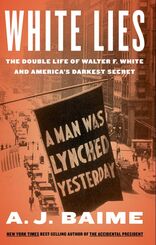
A Man Was Lynched Yesterday

1/30/2023

0 Comments

 
Picture
Nancy Kendall's life of working with the Underground Railroad is a constant reminder that there are good Samaritans out there who risked their lives as Nancy Kendall and Andrew Kendall did to help others.

They are often lost in the background. I think they are not mentioned, because their lives don't seem dramatic enough. And, because many of them were, and are, Black themselves. 

We all know Harriet Tubman, of course. But, how many of us have heard of Walter White?

Walter White was a Black civil rights leader who helped form the NAACP. He was a white news reporter who let the rest of America, and the world, in on Jim Crow laws, lynchings, "unsolved" murders, and the crimes committed against Black citizens by white America. 

"White Lies: The Double Life of Walter F. White and America's Darkest Secret" by A.J. Baime uncovers the details of a remarkable life - Walter F. White, a Black activist who risked his own life investigating racist murders while passing for white. He was fair skinned with a racially mixed background who passed easily, leading a dangerous double-life, using white privilege to shine a light on the America's darkest crimes. 

In the wake of yet another Black man's death at the hands of those who were supposed to protect and serve, we take courage in the fact that there are those in the past and present who work to change the course of justice in America. Their stories must be told.
​
0 Comments

A Class Act, but a Difficult Legacy

9/27/2022

0 Comments

 
Picture
When Silence Reigns
​
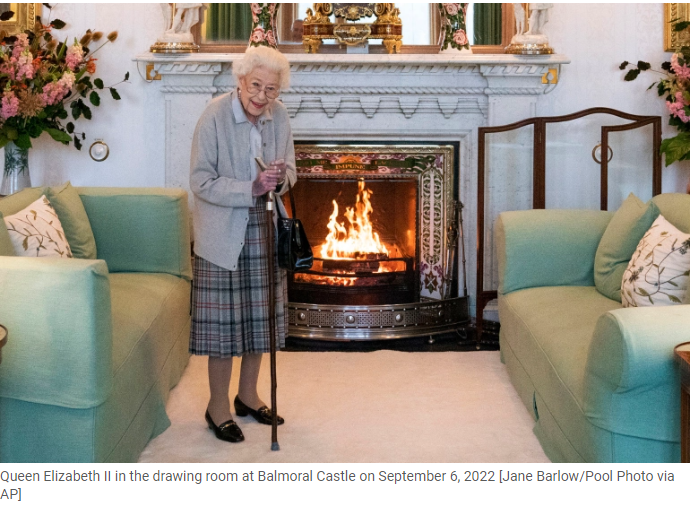
As we tell Nancy Kendall’s story, we often see modern parallels.  The recent passing of Queen Elizabeth II brought criticisms to the fore regarding the history of the monarchy and its brutal acts of imperialism as it built the Commonwealth.  For those of us in the US, we cannot help but find similarities between those unspeakable acts of cruelty and those in which our young and growing republic engaged. 


As a developing nation, we were desperate to escape the rule of England, King George the III.  We fought and paid dearly to break away from the monarchy. We subsequently wrote our own laws, both brilliant and flawed, to establish our hard-won independence.  
​

Everything about imperialism and colonization seems evil, particularly its treatment of the people whose homelands are gobbled up. For centuries, the British Empire was single-minded in its pursuit of reigning over subjects in far off lands.  

As we built our newly independent country, we also journeyed to foreign lands to capture and enslave human beings for our use. We treated them as property with no rights or respect, simply because people of color were considered lesser-beings, and “should” be subservient. 

We nearly succeeded in our efforts to wipe out the original inhabitants of this continent, along with their rich cultures.  Our attempted destruction of Native Americans, and our kidnapping and enslavement of Africans, rank as similarly atrocious acts to the imperialistic takeovers committed by the armies of Britain at the behest of the monarchy.  

Nation building in any form is often cruel and unfair.  We now watch in horror as the leader of Russia pushes ahead, seemingly no cost too great, in his quest to conquer Ukraine and its people.   

Both the US and the UK have only just begun the difficult discussions, not only to face the past with honesty, but also to amend the wrongs with reparations to the peoples the nations conquered.  

We must learn from our own acts of imperialism and vow never to repeat this part of our history.  May the passing of the long reigning Monarch bring forth a new era of progressive thinking for the UK, the US and the rest of the world.     

To learn more about the monarchy and its dubious past, read:
  • How the British royal family has turned a blind eye to its racist past
  • Queen Elizabeth seemed sweet, the monarchy isn't
0 Comments

    Nancy Jean

    Nancy Jean is a woman of several lives and careers, including school teacher, homemaker, parent, amateur musician and writer. ​Read more...

      Subscribe to My Newsletter!

    Sign Me Up!

    Archives

    July 2023
    April 2023
    January 2023
    November 2022
    September 2022
    August 2022
    July 2022
    June 2022
    May 2022
    April 2022
    March 2022
    February 2022
    January 2022
    December 2021
    November 2021
    October 2021
    September 2021
    August 2021
    July 2021
    June 2021
    May 2021
    April 2021
    March 2021
    February 2021
    January 2021
    December 2020
    November 2020
    October 2020
    September 2020
    August 2020
    July 2020

    Categories

    All
    1840
    Abraham Lincoln
    Activism
    Black Americans
    Civil War
    Election
    Films
    Grandfather's Gift
    Historical
    Immigrants
    Iowa
    John Lewis
    Journal
    Kentucky
    Nancy Kendall
    Native Americans
    People
    Racism
    Science
    Slavery
    Underground Railroad
    Voting
    Women

    RSS Feed

Home

About

The Gift

Gallery

Contact

Copyright © 2020-2023